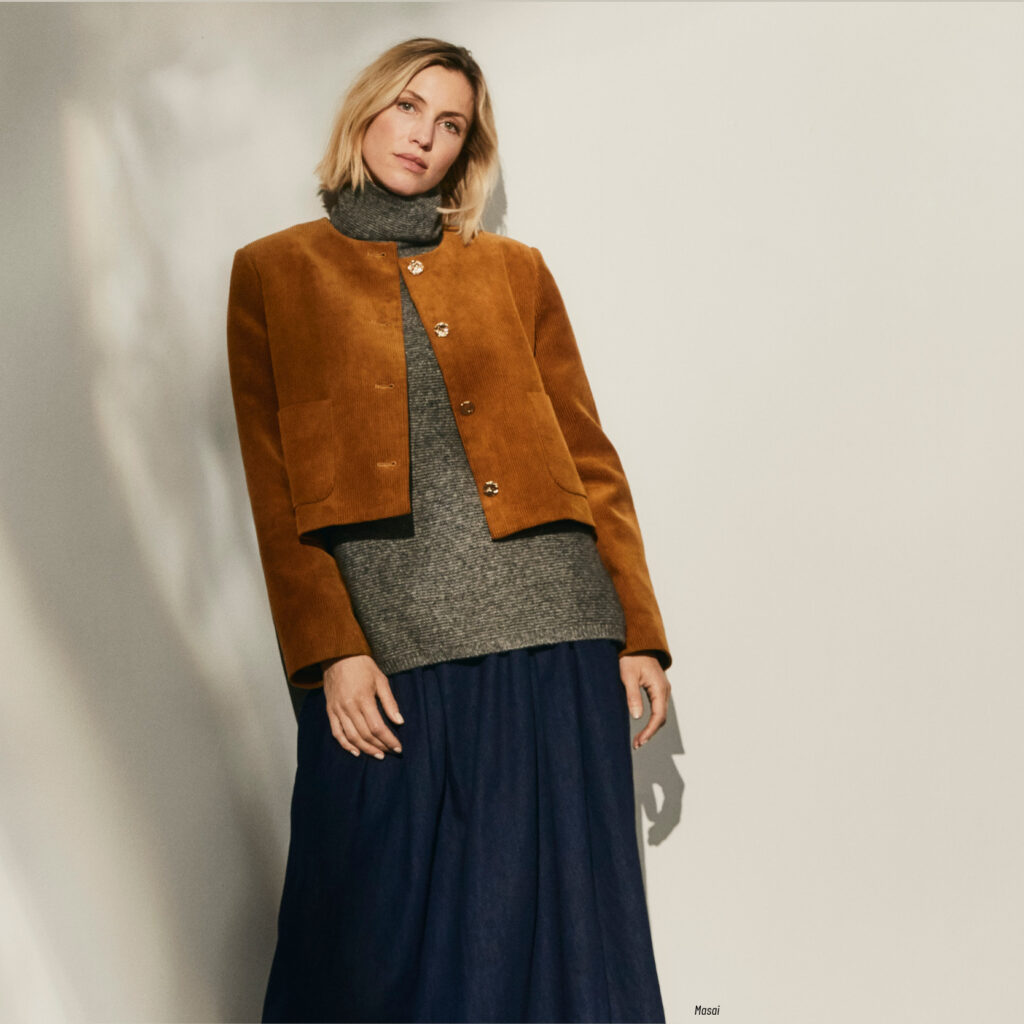


With 29 years of experience from Bestseller, Lisbeth Holm has set out to renew and redefine Masai. Her strategy as the new CEO in the Copenhagen fashion company rests on merchandising, a sharper product, and consistent decency.
Masai is not a brand that lacks values. It is an established clothing brand that, for a period, has lacked focus. After two changes of ownership and several years with different CEOs, the challenge has been to make product, business, and decisions hang together again at Masai.
That was precisely the task Lisbeth Holm said yes to when she took up the role as CEO in December 2024. She has worked at Bestseller in previous roles as Brand Director for Only, Vero Moda, Noisy May, and Mamalicious, as well as USA country director, and she spent 17 years in the group’s executive management.
“When you have worked in one place for nearly 30 years, it is a big decision to do something else. It fell on Masai because of the decency. I have rarely experienced so much decency, both towards each other at Masai, towards suppliers, and towards customers. There is also high seniority, and there are capabilities here that you can only get something good out of,” Lisbeth Holm explains.
With her long experience and deep industry knowledge, Lisbeth Holm has been given the mandate to secure Masai’s future:


“The case and the brand were very clear to me and genuinely had something to offer. At the same time, it was obvious that focus had slipped. My task is to dust off the product and tighten up. It is a turnaround – that is no secret – but it is not a cost-cutting exercise. Under the private equity ownership, focus on the product was lost, and you cannot do that in the long run. If the product is not strong enough, then the rest can be irrelevant.”
The turnaround must also be seen in light of Masai’s history. In 2015, Masai’s founders Nina and Hans Rye sold the company to the British private equity fund Silverfleet Capital, which raised turnover markedly, but briefly, before the fund withdrew again in 2020. Since then, the company has been in a more challenged phase with declining sales. Today, Masai is owned by the investment and asset manager Arcmont Asset Management, which works with a long-term perspective on the brand’s development.
For Lisbeth Holm, the company’s turnaround is not about quick fixes, but about getting merchandising under the skin and letting facts guide decisions:
“I have spoken from facts and tried to take a non-emotional approach to it. At Masai we had fewer and fewer people buying our clothes – and you have to relate to that. How do we add to and renew the products? If we do nothing, others take a slice of the cake.”
The strategy has therefore also required a break with ingrained habits, Lisbeth Holm continues:
“The organisation is on board, and I am really proud of them. When you have done things for many years, and then people’s approach changes, we of course need to practise. It is about replacing the logic of ‘we usually do it like this’ with the question: ‘What happens if we do it like this?’. That approach has been crucial to setting a new direction.”
Masai tuned for growth
To translate the new approach into practice, Lisbeth Holm has initiated a renovation of the commercial processes. Central to the strategy is a new focus on the core of the business. That has meant a more structured approach to data and a collection build-up with more drops throughout the year, plus an express programme that makes it possible to deliver goods more quickly to shops mid-season.
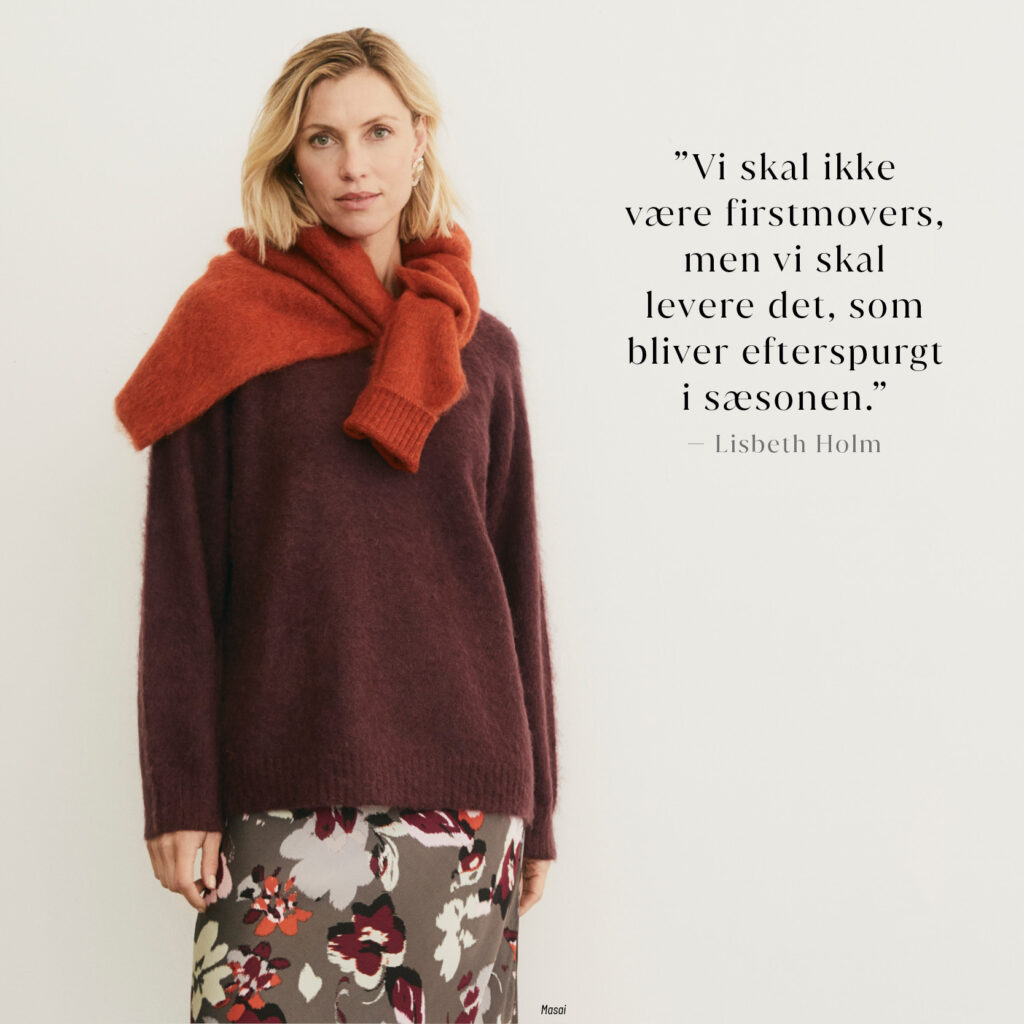
“We should not be first movers, but we must deliver what is demanded in season,” Lisbeth Holm says.
At the same time, Masai’s NOOS programme has been expanded significantly, and it has created new demand. Especially for the basic clothing, such as the brand’s sought-after trousers and loose-fitting jersey items, which are still produced by the same supplier in Portugal for 30 years. That ensures that the most important basics are always available to customers, with a low minimum for shops.
The results already speak clearly. Lisbeth Holm can state that they have grown across the last three collections, and the latest collection alone delivered an increase of 17 per cent.
Dusting off a classic
The break with habitual thinking also extends to distribution. Masai has previously taken pride in mainly being represented in the smaller shops. But in a changing market, that approach is no longer sustainable:
“Masai had an approach before where we did not have many large key customers. It is necessary also to be with the big ones, and today we work closely with, among others, Illums Bolighus and Magasin. At the same time, our own Masai shops must be good role models for our change, and here we also already see growth,” Lisbeth Holm elaborates.
At the same time, e-com plays an ever larger role in Masai’s business and shows significant growth. The updated visual identity and more consistent styling have given the brand renewed attention. Customers have noticed the change, and it has contributed to an influx of new customers and a lift in sales on the digital channels.
A key part of Masai’s new strategy is also about regaining respect for the product itself and its relevance for the customer. Lisbeth Holm has worked systematically through the value chain to ensure that the product once again stands razor-sharp in the market.
“Success for us only exists if the success sits with the end user, and therefore it is our customers who dictate our development. Masai’s customers are so loyal that they actually cheer when they see renewals, so we really want to give them something new. We must dare to make the clothes even better, and that important task is already well underway.”
Even though the market and the times are not easy, Lisbeth Holm looks with optimism towards Masai’s future. The changes can already be felt both internally in the organisation and in the improved sales figures:
“We all have our hands on the hob. Now we must train everything we have launched, because the art is not starting ideas – it is the work of making them function. It is about merchandising, the products, and decency all the way around. That is also what we hear from customers – they can see a change, and therefore they buy more from us,” Lisbeth Holm concludes.