

Sponsored content
STUDIO 9 is a strategic partner for fashion and furniture brands, offering solutions that span the entire value chain – from design and product development to production, sourcing, compliance and digital services. The digital product passport is a natural extension of that role, linking data, operations and brand identity across systems and processes.
It starts with a T-shirt. Or a jacket. Or a dress. But in the future, it also starts with data. Behind the colours, cuts and materials, a new reality is emerging: where every product receives its own digital identity. As part of the EU’s Ecodesign Regulation, from 2027 it will be mandatory to assign a digital product passport (DPP) to a wide range of textile products, including clothing, footwear, and home textiles. This means that information about materials, origin, carbon footprint and circularity must be digitally accessible – not only for authorities but also for consumers.



It marks the beginning of a new way of thinking about products. Where data and compliance are no longer things, you chase after the fact but follow the product as an integrated part of its development and DNA. This opens new opportunities – from strengthening the brand and improving transparency across the value chain to smarter ways of running a business.
“The digital product passport should not be seen simply as a regulatory burden. It can become a new tool for strengthening the connection between product, producer, and consumer,” says Rasmus Ravnholt, Sales Director at STUDIO 9.
A Tool for Internal Processes and External Demands
STUDIO 9 has developed a DPP solution that turns potential into something tangible. It gathers all product data in one place and makes it accessible across departments and platforms. The solution is not only an outward-facing tool – it’s just as much an internal management system, offering a clear overview of materials, certifications, and the product’s lifecycle.
This insight enables companies to strengthen products and processes across operations, quality, and sustainability. It provides a solid foundation for choosing better materials, optimising product design and reducing environmental impact – all based on data and verified knowledge.
“The traceability you create externally generates just as much internal value,” Rasmus points out. “You become more aware of your processes and decisions – and that leads to better choices and fewer errors.”
A DPP Solution Built for the Reality of the Fashion Industry
Many companies are facing a very real challenge: how do you collect data from hundreds of suppliers? How do you structure and store it efficiently? And how do you implement a solution smoothly without introducing complex new workflows?
That’s exactly what STUDIO 9’s solution is built around. It’s developed based on the reality of the industry and in close collaboration with the production side – where shifting suppliers, complex data flows and tight deadlines place specific demands on the solution.
“Many existing systems are developed within IT frameworks and focus on legal clauses and theoretical models. Our solution isn’t theoretical compliance – it’s practical, accessible, and scalable.”
RASMUS RAVNHOLT, SALES DIRECTOR
That’s why the DPP solution requires no heavy integrations or new system landscapes. Instead, it can be accessed manually or linked to existing systems via standardised integrations – consolidating all product data on a single platform that works across functions. This makes it possible to turn legislation into a practical, efficient, and manageable process.
“It’s about making the complex simple,” Rasmus concludes. “Compliance should be a value-adding part of the process – not a roadblock to innovation.”
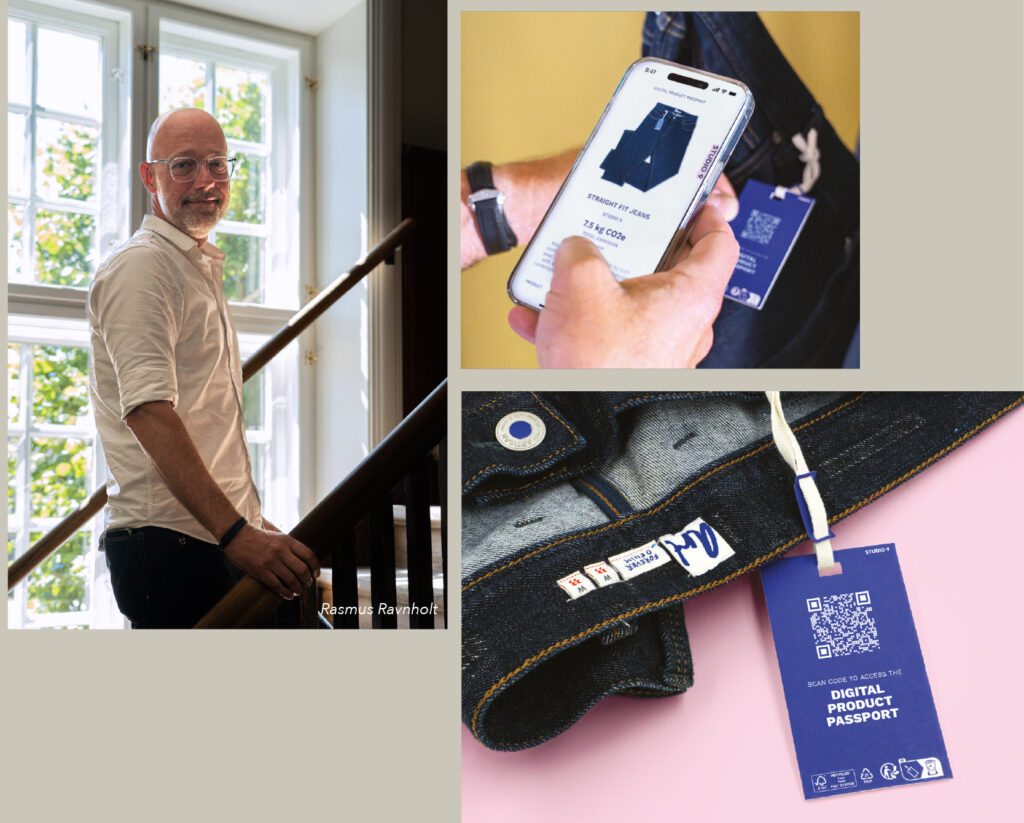
Under the leadership of Rasmus Ravnholt, STUDIO 9 has positioned itself as a modern production house, collaborating with major brands on design, production, and digital solutions. Their new DPP solution digitises product data and helps ensure compliance with the Ecodesign Regulation.
Photo: Malene Nielsen
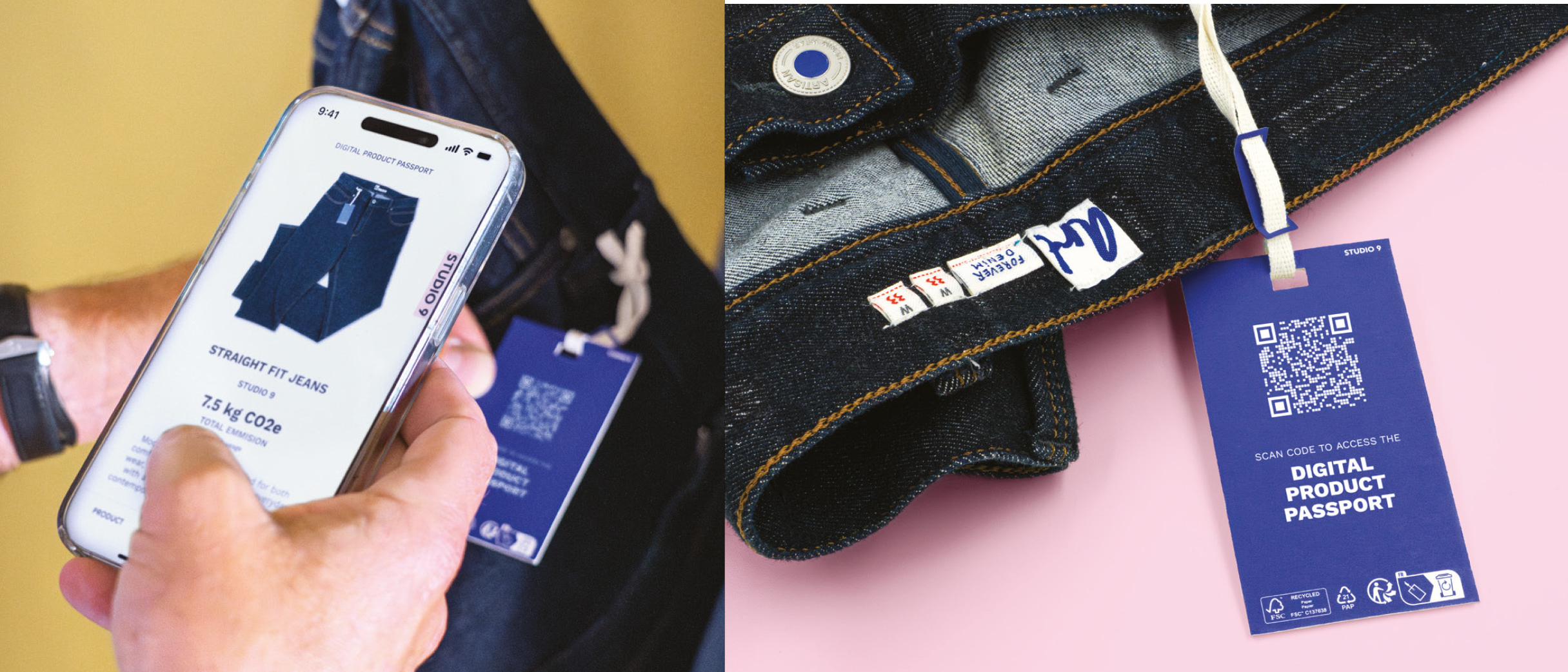
Via a QR code, the consumer can access the entire digital passport and follow the product’s journey from cotton field to shop. This makes it easy to display sustainability certifications, document origin and offer relevant services – even after purchase.
Photo: Malene Nielsen
Sponsored content by STUDIO 9